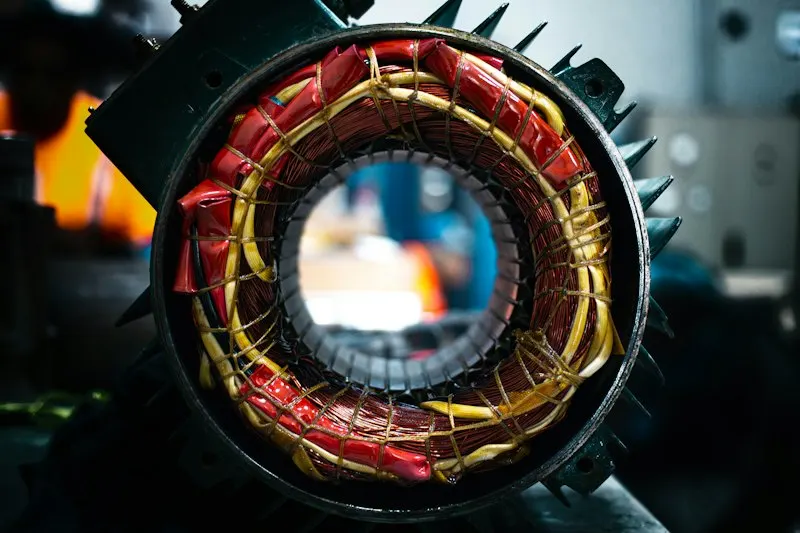
 Repair
When a large motor fails, the decision between repair and replacement often turns on one question: will the repaired motor be as efficient as before? For years, a common rule of thumb said that every rewind cost one or two points of efficiency. Testing has shown that this is not a law of physics. It depends on how the repair is done.
The evidence
In 2003, the Electrical Apparatus Service Association (EASA) and the Association of Electrical and Mechanical Trades (AEMT) in the UK published a joint study on the effect of repair and rewinding on motor efficiency. Motors were tested before and after being rewound under controlled conditions. The conclusion was that motors repaired using good practice maintained their original efficiency within the accuracy of the test.
As premium efficiency designs became common, the associations returned to the question. A follow-up study published in 2019 tested IE2 and IE3 motors and reached the same conclusion: properly performed repairs did not reduce efficiency, including on the higher efficiency classes.
What good practice looks like
Both studies point to the same set of controls that separate an efficiency-neutral repair from a lossy one:
- Controlled stripping. Burnout ovens with accurate temperature control, so the stator core insulation is not damaged.
- Core testing. A core loss test before and after stripping to confirm the core is sound before rewinding.
- Exact winding data. The same or a larger copper cross section, the same turns and an equal or shorter mean length of turn.
- Mechanical care. Correct bearing fits, air gap and cooling, because mechanical losses count too.
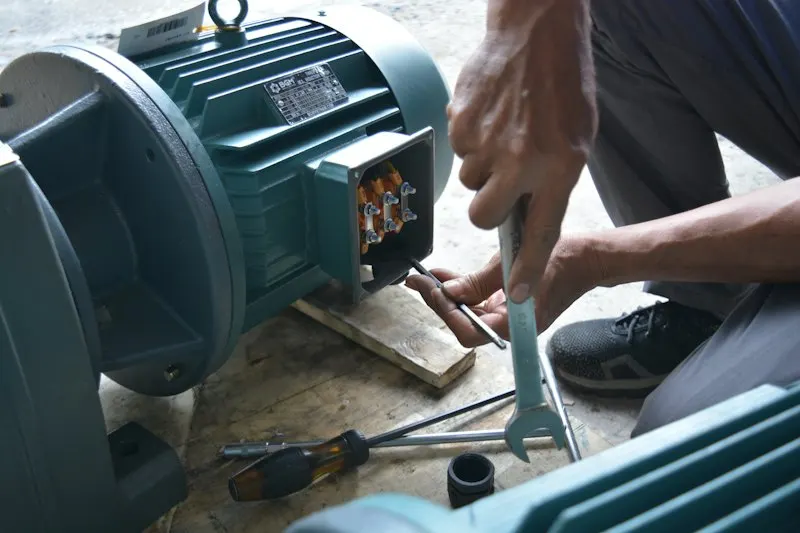
- Final testing. No-load current, winding resistance and insulation results compared with the original data.
EASA documents these steps in its recommended practice for the repair of rotating electrical apparatus, ANSI/EASA AR100, and in the good practice guide published with AEMT.
Making good practice visible
The studies prove what a well-run shop already knows. The challenge is showing it to the customer every time. When each of these checks lives on the work order as a required form with clear limits, the shop can hand over a complete record with the motor, and the repair versus replace conversation starts from facts.
 Regulation
 Testing
 Reliability