 Reliability
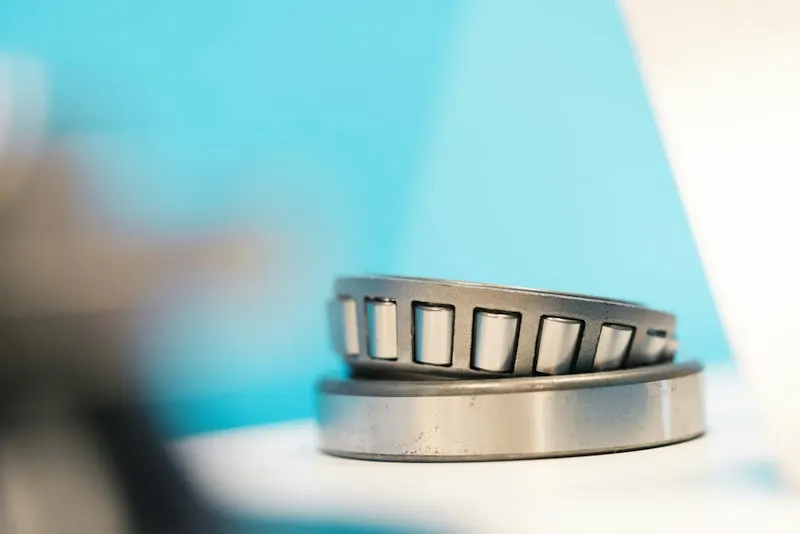
Variable frequency drives are one of the most effective ways to cut the energy used by pumps, fans and compressors. As more motors run on drives, repair shops are seeing a failure mode that used to be rare: bearings damaged by electrical current.
Where the current comes from
A PWM drive switches its output very fast. The result is a common-mode voltage that couples capacitively from the stator winding to the rotor. When the voltage across the bearing's lubricating film exceeds what the film can hold, it discharges through the rolling elements and races. Each discharge is tiny, but they happen many thousands of times an hour.
What the damage looks like
- Frosting: a dull, matte grey band on the raceway, made of countless micro pits.
- Fluting: a regular washboard pattern of grooves across the raceway, which develops as the pitting continues and causes noise and vibration.
- Degraded grease: darkened or burnt lubricant, often found with the damage above.
Because fluting shows up as rising vibration and noise, it is often mistaken for a lubrication or alignment problem. Cutting the bearing and inspecting the raceway is the most reliable way to confirm it.
Prevention
The right fix depends on the motor size and the installation, and is usually a combination of measures:
- Shaft grounding with a grounding ring or brush, to give the current a path that bypasses the bearings.
- Insulated or hybrid bearings, with an insulating coating or ceramic rolling elements, often on the non-drive end of larger motors to break circulating currents.
- Good installation practice: symmetrical shielded motor cable, proper high-frequency bonding between motor, driven equipment and drive, and filters where needed.
- Inverter-duty motors designed for drive operation, such as those meeting NEMA MG 1 Part 31.
Closing the loop with the customer
A replaced bearing without a root cause is a repeat job waiting to happen. When the teardown finding, photos of the raceway and the recommended fix are recorded on the work order and shared in the customer report, the shop moves from replacing parts to solving the problem.
 Regulation
 Repair
 Testing