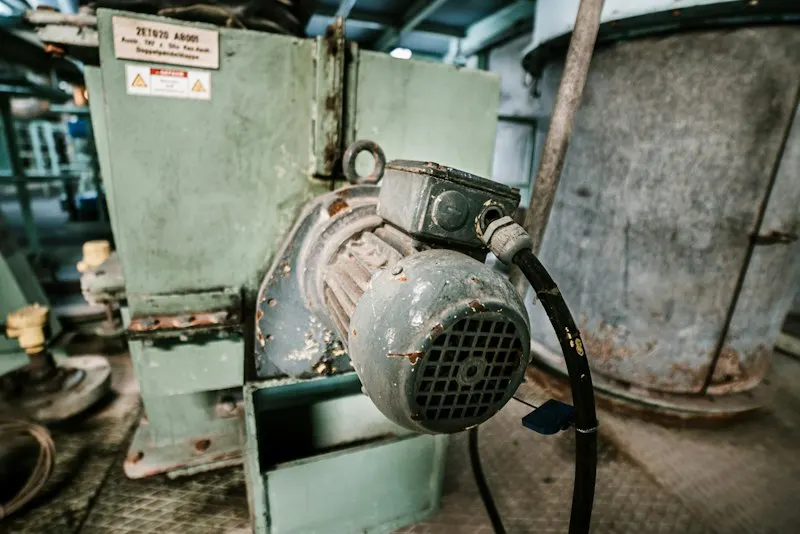
 Regulation
Electric motors are one of the largest single users of electricity on the planet, so it is no surprise that regulators keep raising the bar on how efficient a new motor must be. In Europe, the reference point is Commission Regulation (EU) 2019/1781, which sets ecodesign requirements for electric motors and variable speed drives.
What the rules require
The regulation tightened in two steps. Since 1 July 2021, most new three-phase induction motors with a rated output from 0.75 kW to 1000 kW, with 2, 4, 6 or 8 poles, must meet at least the IE3 efficiency class defined in IEC 60034-30-1. Since 1 July 2023, motors from 75 kW to 200 kW with 2, 4 or 6 poles must reach IE4. The same 2023 step brought smaller motors from 0.12 kW to 0.75 kW up to IE2, and extended requirements to increased-safety motors for explosive atmospheres. Variable speed drives have their own requirement of class IE2.
These requirements apply to products placed on the market. How they interact with repaired or rewound units depends on the case and on national guidance, so shops should check with their customers and their national authority when a repair changes a motor's rated characteristics.
Why it matters on the bench
Higher efficiency classes are achieved with better steel, more copper, tighter air gaps and lower losses across the board. For a repair shop, that has practical consequences:
- Core care matters more. Stripping methods and burnout temperatures need to be controlled, and core loss testing before and after stripping becomes standard evidence that the core was not damaged.
- Winding data must be exact. Wire size, turns, coil pitch and connection need to be recorded and reproduced, because small deviations show up as measurable losses on a premium design.
- Documentation becomes part of the product. Customers with energy targets increasingly ask for test results that show the motor left the shop as efficient as it arrived.
Turning compliance into a record
None of this is new to good repair shops. What changes is how much of it has to be written down and handed over. A repair that is done well but documented on paper is hard to prove months later when a customer's energy auditor asks for it.
In Motrix, the readings that matter, from core loss and winding resistance to insulation and the final run test, are captured on forms attached to the work order, checked against the limits you set and included in the customer report. The evidence is built while the work is done, not reconstructed afterwards.
 Repair
 Testing
 Reliability